Patient engagement
Reach patients during preparation, answer questions, and prevent readiness failures before they become cancellations.
Promise: change the outcome earlier.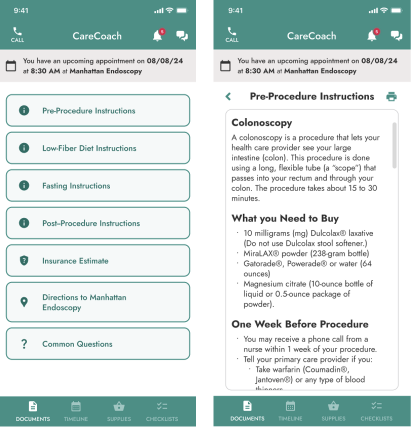
Provation · Scaling patient readiness · 2025
From prediction to prevention
I led the design process that helped Provation choose between two approaches: engage patients earlier or build a cancellation-risk model. The work turned that strategic uncertainty into a product direction the organization could pilot.
01 · Challenge
The roadmap entered the work prioritizing cancellation prediction. Patient engagement was the competing direction. Both promised scale, but research needed to determine whether the data, timing, and workflow required by either approach actually existed.
Reach patients during preparation, answer questions, and prevent readiness failures before they become cancellations.
Promise: change the outcome earlier.Identify high-risk patients so staff could focus outreach where it may matter most.
Research constraint: reliable readiness and cancellation signals were not available.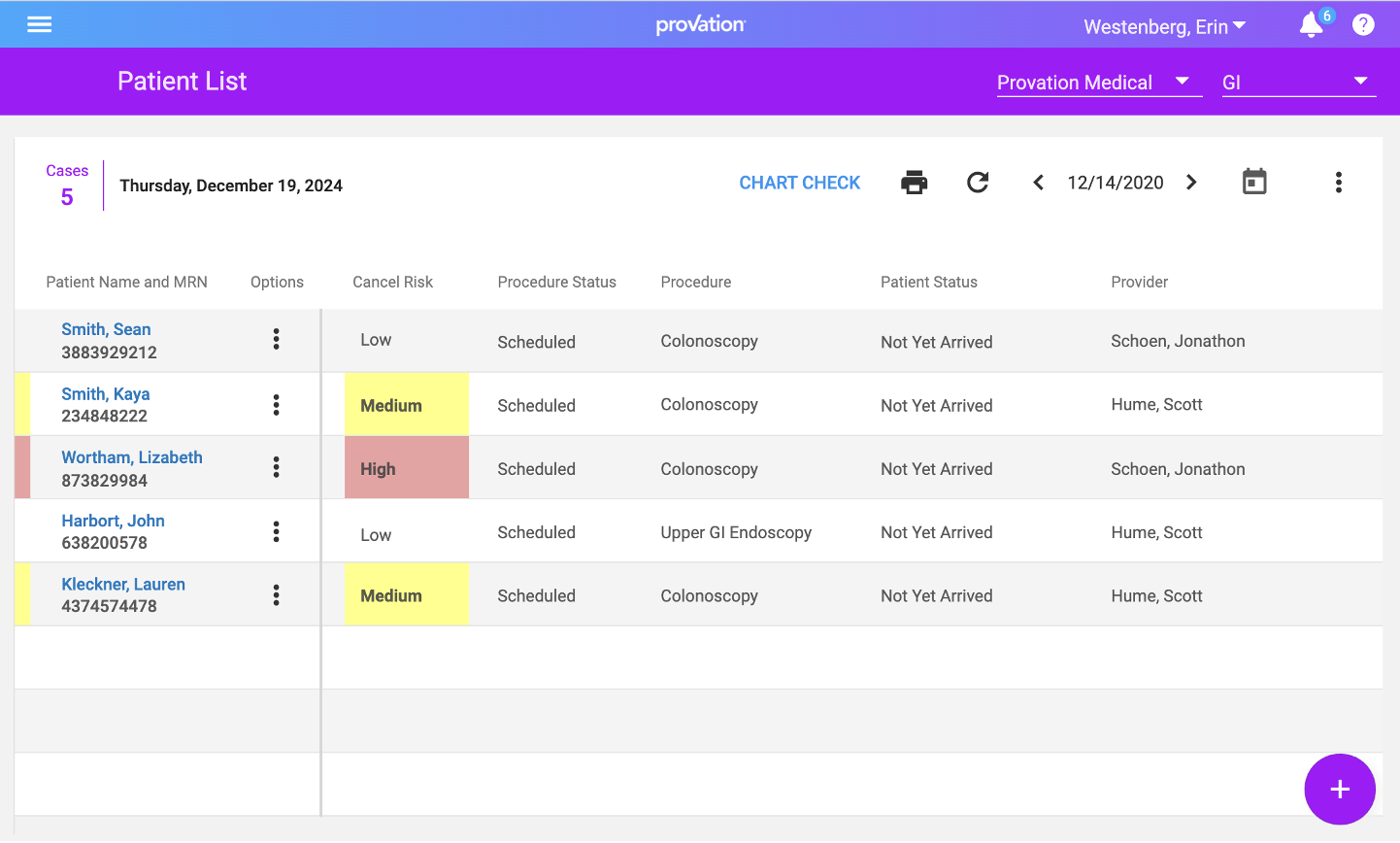
Before choosing what to build, I needed to determine where readiness actually failed, what signals existed, and which intervention could work inside a live clinical pilot.
02 · In-person workshop
I brought together 15 cross-functional stakeholders from medical content, legal, technology, product, and data science, with some in the room and others joining virtually.
The goal was to onboard a new contractor team that was eager to start development but did not yet know where to begin. By reviewing the hypothesized journey and overlaying the concepts, I facilitated breakout discussions that exposed the feasibility, desirability, and viability unknowns behind each direction.
Where did the hypothesized patient journey suggest readiness and cancellation risk changed?
A shared starting pointWhere would patient engagement and cancellation prediction intervene across that journey?
Concepts anchored in contextWhat did each concept assume about feasibility, desirability, and viability?
Breakout discussions I facilitatedWhich technical and field-research questions had to be answered before development?
A prioritized experimentation planA prioritized research and experimentation plan for deciding what the team could and should build.
Inspect the data lake, confirm which data we could access, and determine whether cancellation prediction was technically feasible.
Understand ambulatory surgery center (ASC) workflows, how teams assessed risk at each step, and how strongly each concept resonated.
03 · Research
We conducted 12+ virtual and in-person interviews across nurses, schedulers, physicians, and patients. We traced how readiness moved from scheduling through procedure day, learned how teams identified risk, and gathered feedback on where each concept fit.
In parallel, technical experiments tested what data was actually accessible. Together, the two tracks turned workshop assumptions into evidence.
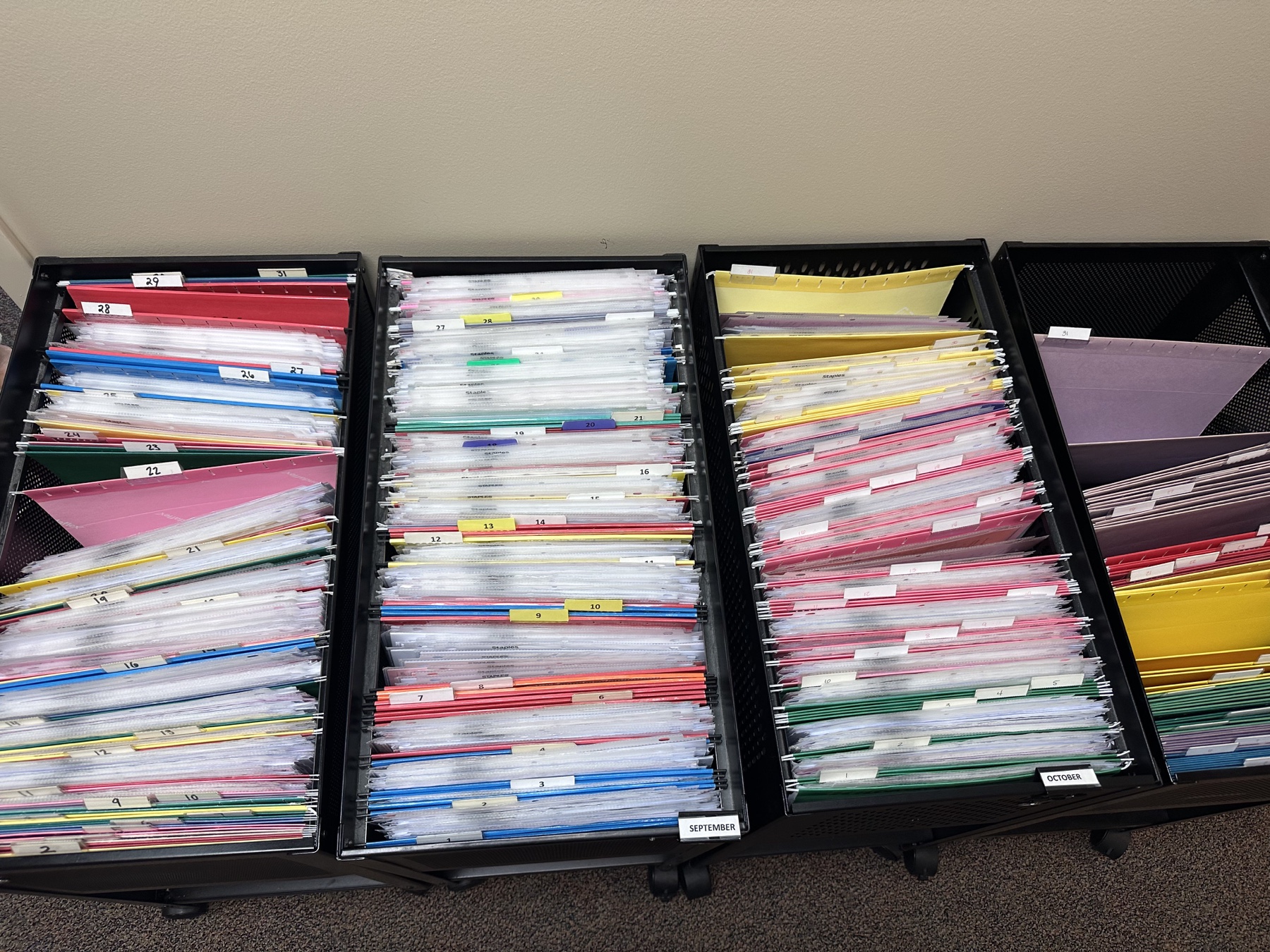
Patients experienced significant anxiety, often lost or forgot their preparation instructions, and sometimes learned the importance of preparation too late to prevent a cancellation.
Synthesized readiness observationInstructions alone were not enough when patients could lose them, forget key steps, or miss why preparation mattered until it was too late.
Reinforce preparation with timely, reassuring guidance before risk becomes a cancellation.
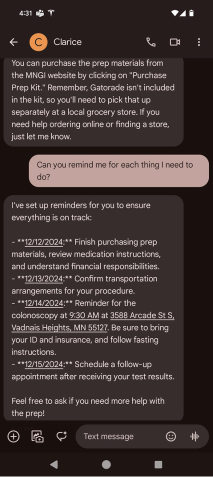
Many ASCs designated a full-time nurse to call patients about preparation; the proposed experience could handle much of that routine outreach and focus nursing time on patients who needed judgment.
Synthesized ASC workflow observationThe opportunity was not simply to identify risk, but to reduce repetitive calls while surfacing the patients who needed help.
Automate routine guidance and reserve nurse time for exceptions.
Readiness risk became visible through staff conversations, but the data lake did not contain the passive signals the proposed prediction model required.
Workflow interviews + data-access experimentsUseful readiness signals were being created through outreach rather than captured early enough for prediction.
Use engagement to create the signals a future model could learn from.
04 · Journey + product direction
PATIENT + NURSE / CLINIC SWIMLANESI synthesized the interview and workflow evidence into the journey map below. It showed when risk became visible, where there was still time to intervene, and where each concept fit. Chat and reminders could prevent breakdowns and create signals for a nurse dashboard; the cancellation model could not proceed because the passive data it required did not exist.
Receives a procedure date and printed preparation instructions
Interprets preparation guidance alone at home
Needs reassurance but hesitates to call the clinic
Finally discusses readiness with a clinician
Arrives ready, or cannot proceed
Books the procedure and moves to the next patient
Has no visibility into progress or confusion
Does not know that support is needed
Calls, assesses, escalates, or reschedules
Proceeds or loses the appointment slot
Readiness begins, but attention and risk are both low.
Misunderstanding stays silent while it is still preventable.
Uncertainty peaks without an easy, trusted way to ask.
Useful risk signals appear late and only when a nurse has time to call.
A late failure is difficult to recover.
Set expectations without overwhelming the patient.
Deliver small, timed actions and reminders.
Answer approved questions and capture readiness signals.
Give nurses a readiness view and a prioritized worklist.
Capture outcomes to improve future readiness decisions.
Patients often set instructions aside until preparation felt immediate.
Synthesized research observationScheduling was ruled out as the primary intervention moment because patients were not ready to act.
Confusion could remain invisible until the patient arrived or contacted the clinic.
Synthesized research observationThis became the largest unaddressed window in the readiness journey.
Patients looked for answers elsewhere when a question felt too small to justify calling.
Synthesized research observationThis became the target moment for patient engagement because prevention was still possible.
Nurses generated useful readiness signals during outreach, but those signals were not available beforehand.
Synthesized workflow observationPrediction depended on information the engagement experience could generate earlier.
Once a slot failed on procedure day, the organization had little opportunity to recover it.
Synthesized operational observationReadiness outcomes connected the scaling challenge to the longer-term prediction opportunity.
Scroll horizontally to follow the full journey on smaller screens.
Patient engagement could deliver immediate value, fit the pilot, and generate the readiness data a future cancellation-risk model would need.
05 · Designing the intervention
Phase 1 used an AI-guided patient conversation to reinforce preparation, answer questions, and surface readiness signals. Phase 2 carried those signals into a nurse workflow so staff could focus outreach where intervention was needed.
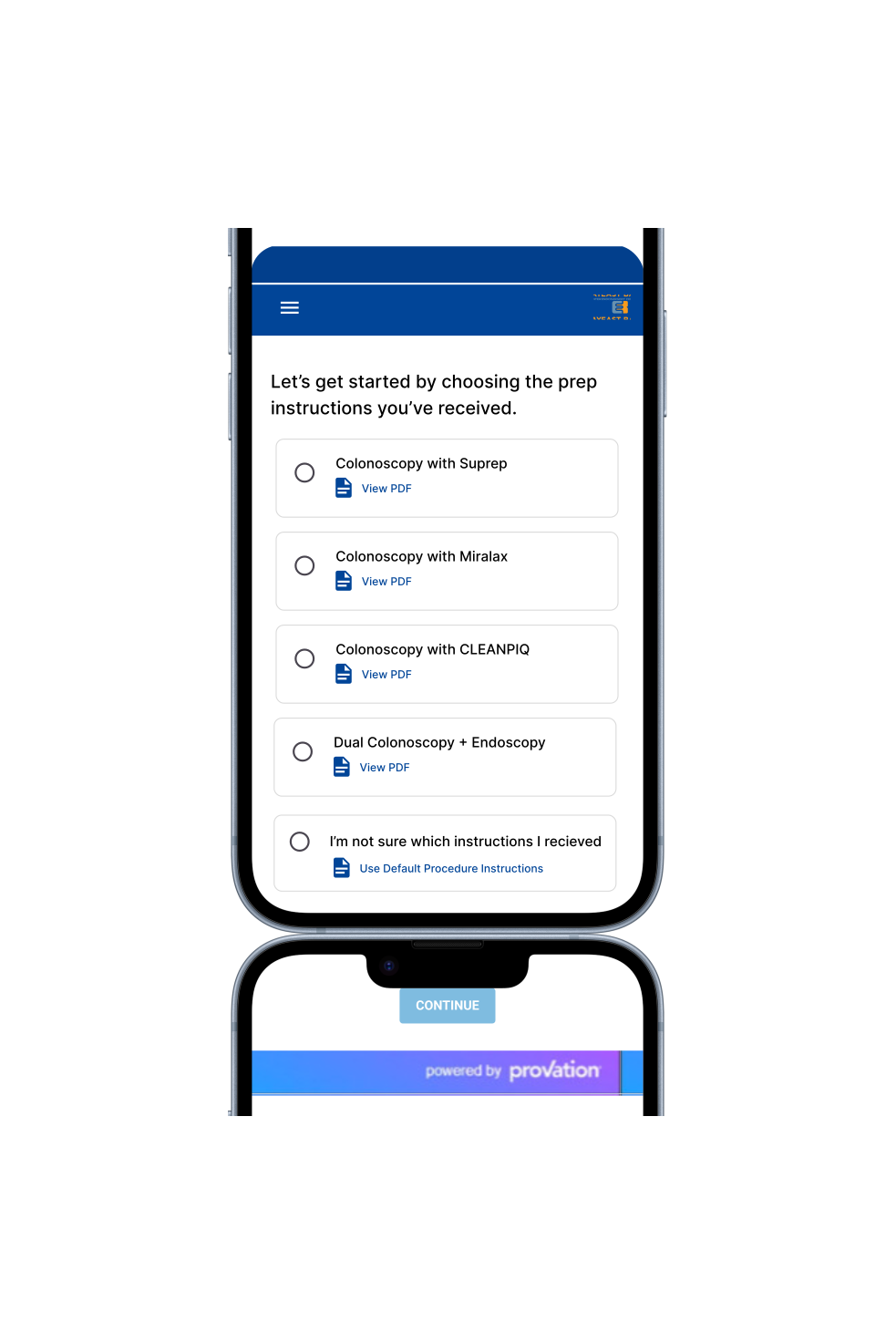
The first phase asked patients to identify the instructions they had received before the experience could provide relevant guidance.
Self-selection was not ideal, but the product could not retrieve instructions from the referring site or store them through another available integration.
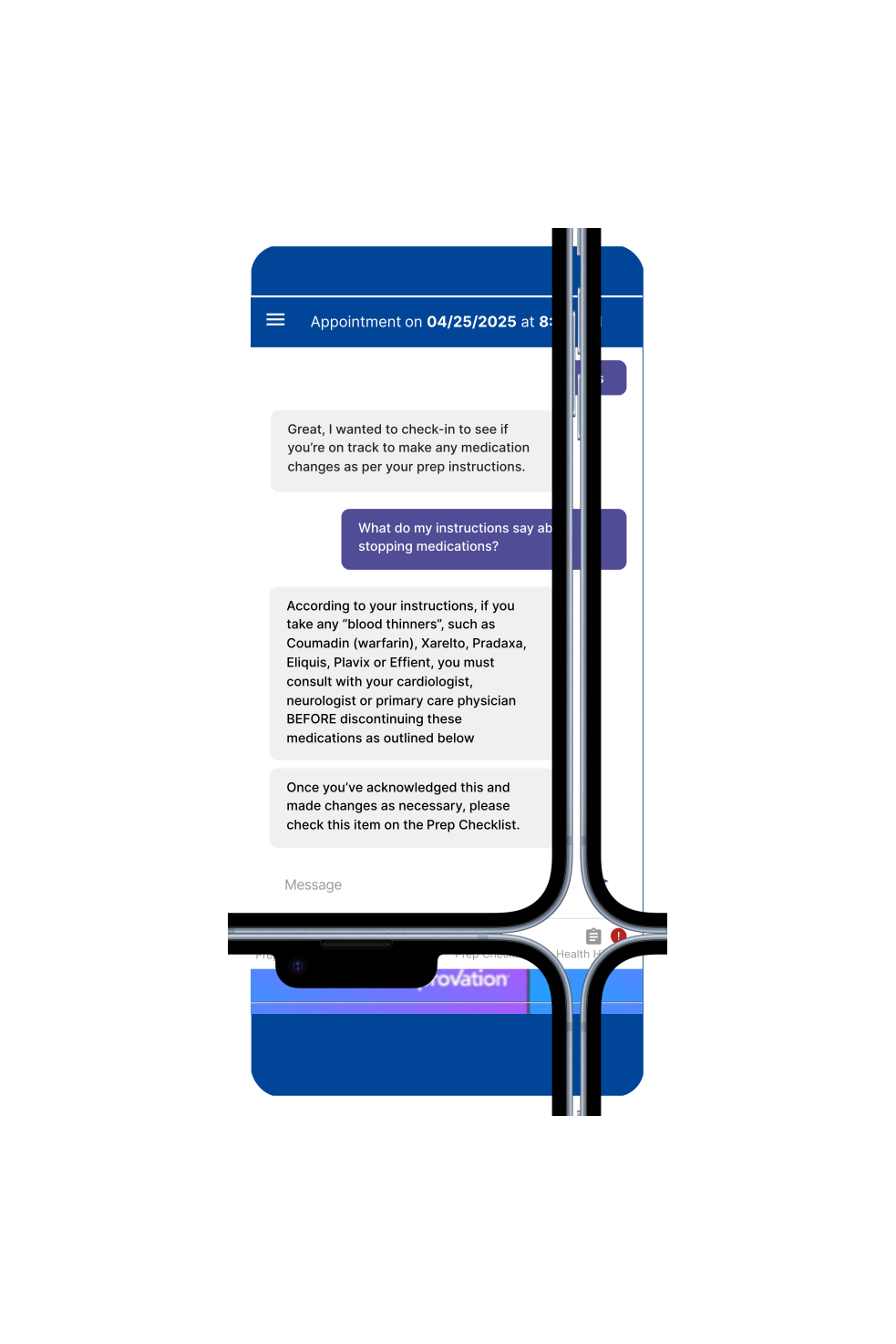
The conversation used the selected instructions as its boundary, translating static guidance into timely questions, answers, and checklist actions.
Answers had to remain grounded in approved instructions and preserve a clear escalation path when clinical judgment was required.
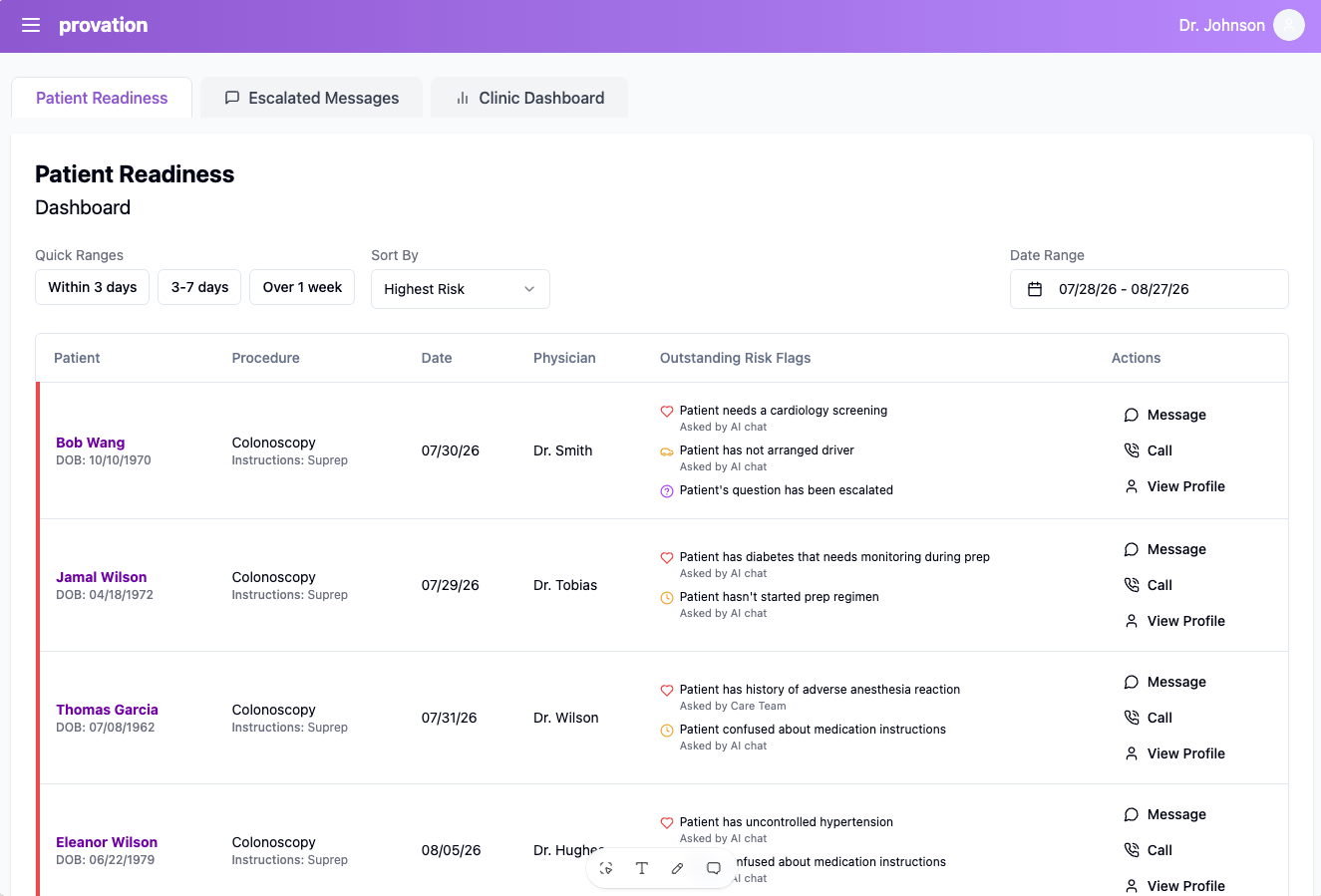
The second-phase dashboard organized patients around readiness flags created through chat so nurses could see where judgment and outreach were needed.
AI prototyping tools accelerated exploration and iteration of the dashboard concept. They supported design speed, not the production system or its clinical decisions.
06 · Pilot + impact
6 WEEKS · HERSHEY ENDOSCOPYMore than 200 patients used the experience. The pilot tested readiness engagement and workflow fit; it was not designed to claim a statistically proven reduction in cancellations.
The team moved from two competing approaches to one shared product direction.
Patient engagement came first because it could prevent problems and create better data.
Cancellation prediction remained on the roadmap, supported by signals the pilot could generate.
The pilot gave the organization a concrete basis for deciding what to fund and learn next.
I reframed a technology choice as a product decision, built the evidence to choose, designed the experience, and helped the organization move forward with a direction it could test and scale.